

24/7 Farm Retail Innovation: A Case Study on Egg Locker Integration and Cold-Chain Preservation in Poland
Project Overview
- Project Location: Poland (Regional Community / Suburban Transport Node)
- Equipment Deployed: Intelligent Fresh Egg Locker Vending Machine
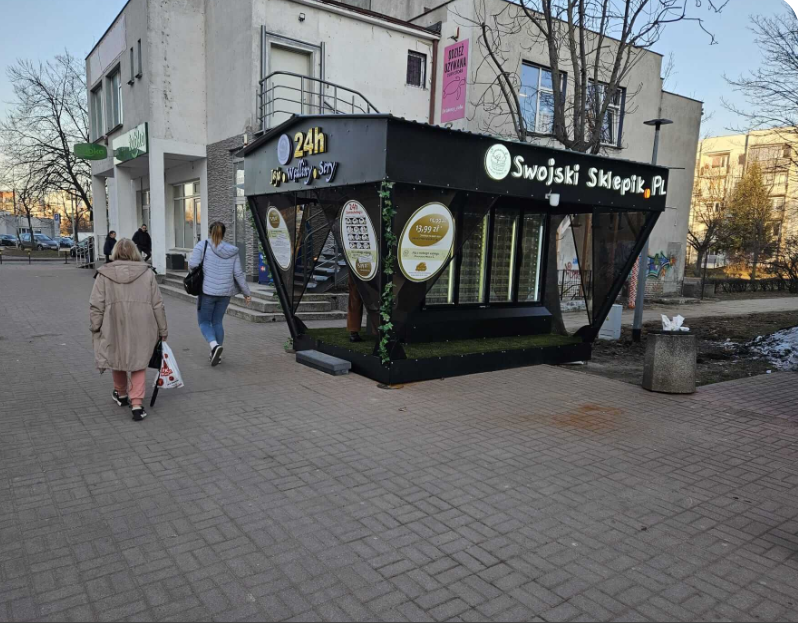
- Deployment Environment: Self-built outdoor retail kiosk (Autonomous Smart Hub)
- Primary Objective: To transition a traditional family-owned poultry operation from wholesale-dependent distribution to a direct-to-consumer (D2C) model, establishing a continuous, labor-free sales presence while maintaining strict product freshness.
About the Client & Context
In the changing European agricultural landscape, small to medium-sized poultry producers face unprecedented structural pressures. The traditional supply chain often requires farmers to rely on large supermarket chains or local wholesalers, a model that significantly compresses profit margins due to intermediary fees and rigid pricing agreements.
The operator in this study, a typical family poultry farm based in Poland, sought a sustainable alternative to capture higher margins by selling directly to consumers. However, opening a traditional brick-and-mortar farm shop presents a substantial financial risk. The costs associated with construction, staffing, and compliance with strict European retail labor laws often outweigh the potential profits for seasonal or highly specialized agricultural products.
To bridge this gap, the operator established a self-built outdoor retail kiosk at a high-traffic junction near their farm. The core of this autonomous hub is an intelligent fresh egg locker vending machine. This setup allows the farm to bypass the traditional supply chain, offering fresh, traceable local eggs directly to nearby communities without the operational overhead of a fully staffed retail store.
Common Industry Challenges
Poultry farmers attempting to establish direct-to-consumer channels commonly face several critical operational hurdles:
- Rising Labor Costs and Limited Availability: Finding reliable retail staff for rural or suburban farm shops is increasingly difficult in Poland. High mandatory minimum wages and strict regulations regarding Sunday trading further limit the viability of staffed retail hours.
- Product Fragility and Spoilage Risks: Eggs are delicate products that require careful handling and strict environmental control. Fluctuating outdoor temperatures can compromise shelf life, while improper handling during traditional vending dispensing leads to high breakage rates.
- Fragmented Customer Purchasing Windows: Local consumers and commuters often prefer purchasing fresh groceries outside of standard working hours—early in the morning before commuting or late in the evening. Traditional retail models fail to capture these high-value time slots economically.
- Inventory Visibility and Mismanagement: Without real-time tracking, operators frequently suffer from either stockouts (leading to lost revenue) or overstocking (leading to product expiration and waste). Manually driving to a remote kiosk just to check stock levels incurs unsustainable fuel and time costs.
Why the Equipment Fits the Scenario
The choice of an intelligent fresh egg locker vending machine specifically addresses the physical and environmental demands of direct farm-to-consumer retailing.
Unlike traditional spiral or elevator-driven vending machines that drop products, a locker-based system completely eliminates the risk of breakage. Eggs remain perfectly stationary in individual compartments until the customer opens the door, ensuring product integrity for delicate, farm-fresh items.
Furthermore, outdoor deployment in Central Europe requires robust environmental controls. Polish climates exhibit severe seasonal variance, with winter temperatures dropping below freezing and summers exceeding 30°C. The selected machine features an integrated climate control system (cooling and heating) that stabilizes internal temperatures between 8°C and 12°C. This temperature range is optimal for slowing down the aging process of the egg membrane and preventing condensation when consumers take the product home, fully complying with food safety standards.
The configuration also features transparent glass lockers paired with localized LED illumination, allowing consumers to inspect the size, color, and quality of the eggs prior to purchase. This visibility mimics the traditional market experience, which is essential for building consumer confidence in automated food retail.
Installation & Deployment
Deploying an automated retail solution in an outdoor environment requires careful preparation across several technical areas:
Structural Shelter and Protection: The self-built retail kiosk was designed with insulated walls and an extended awning. This structure shields the locker machine from direct sunlight, heavy rainfall, and snow accumulation, reducing the load on the refrigeration unit and extending the lifespan of the electronics.
Power and Connectivity: A stable, grounded 230V power supply was routed to the site. To ensure reliable telemetry and payment processing in a suburban area, a dual-sim 4G/5G industrial router was integrated, providing a redundant network connection to prevent offline transaction failures.
Key Takeaways
For agricultural producers considering a transition to automated D2C retail, several critical factors determine long-term success:
Location Selection is Vital: The ideal location for an outdoor egg vending locker is not merely high-traffic, but rather high-convenience. Locations along homeward commuter routes, near local bakery hubs, or adjacent to suburban residential parking lots consistently outperform isolated roadside locations.
Climate Control Cannot Be Overlooked: While basic non-refrigerated lockers are less expensive, they are unsuitable for professional egg retailing in regions with distinct seasonal shifts. Sustained heat compromises egg density and safety, while freezing temperatures can crack the shells. Active cooling and heating are required to protect product quality and maintain regulatory compliance year-round.
Prioritize Modular Configurations: Operators should select locker systems that offer modular expansion. Starting with a base control unit and 30–40 compartments allows the farm to validate local demand before investing in expansion locker bays.


